
 Jems
Jems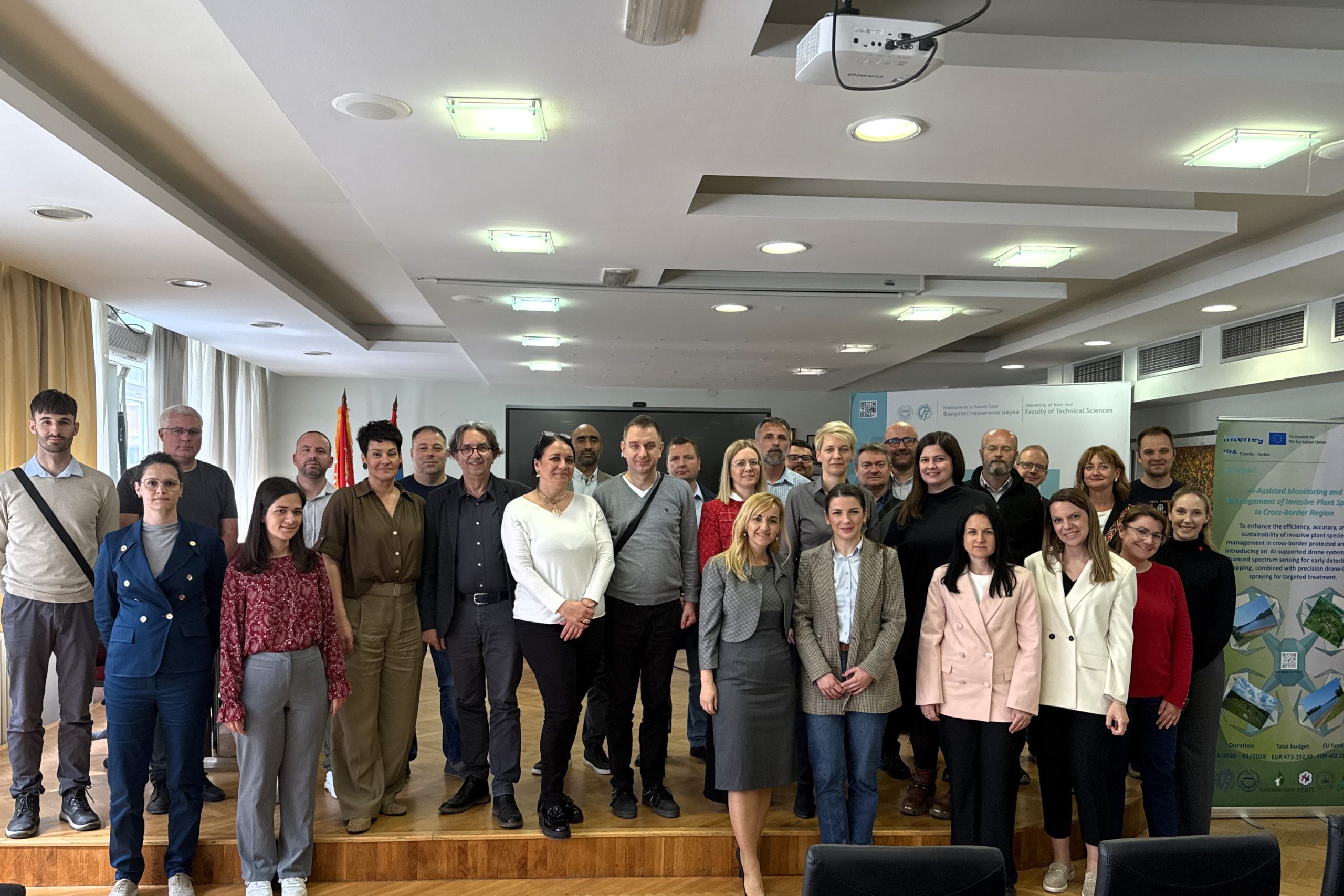
On Monday, 20 April 2026, the kick-off conference for the AI-Assisted Monitoring and Management of Invasive Plant Species in Cross-Border Region – AInspec project, valued at €473,192.00 and co-financed by the European Union under the Interreg VI-A IPA Programme Croatia-Serbia 2021-2027, was held at the Faculty of Technical Sciences, University of Novi Sad, in the presence of around 50 participants and media representatives.
Running from 15 January 2026 to 14 January 2028, the AInspec project aims to improve the efficiency, accuracy, and sustainability of invasive plant species (IPS) management in protected areas in the cross-border region through the use of artificial intelligence and advanced drone technologies. It will foster cross-border collaboration to develop and share innovative solutions and strengthen the capacity of partner institutions, as well as improve the ability of conservation authorities to respond more effectively to threats.
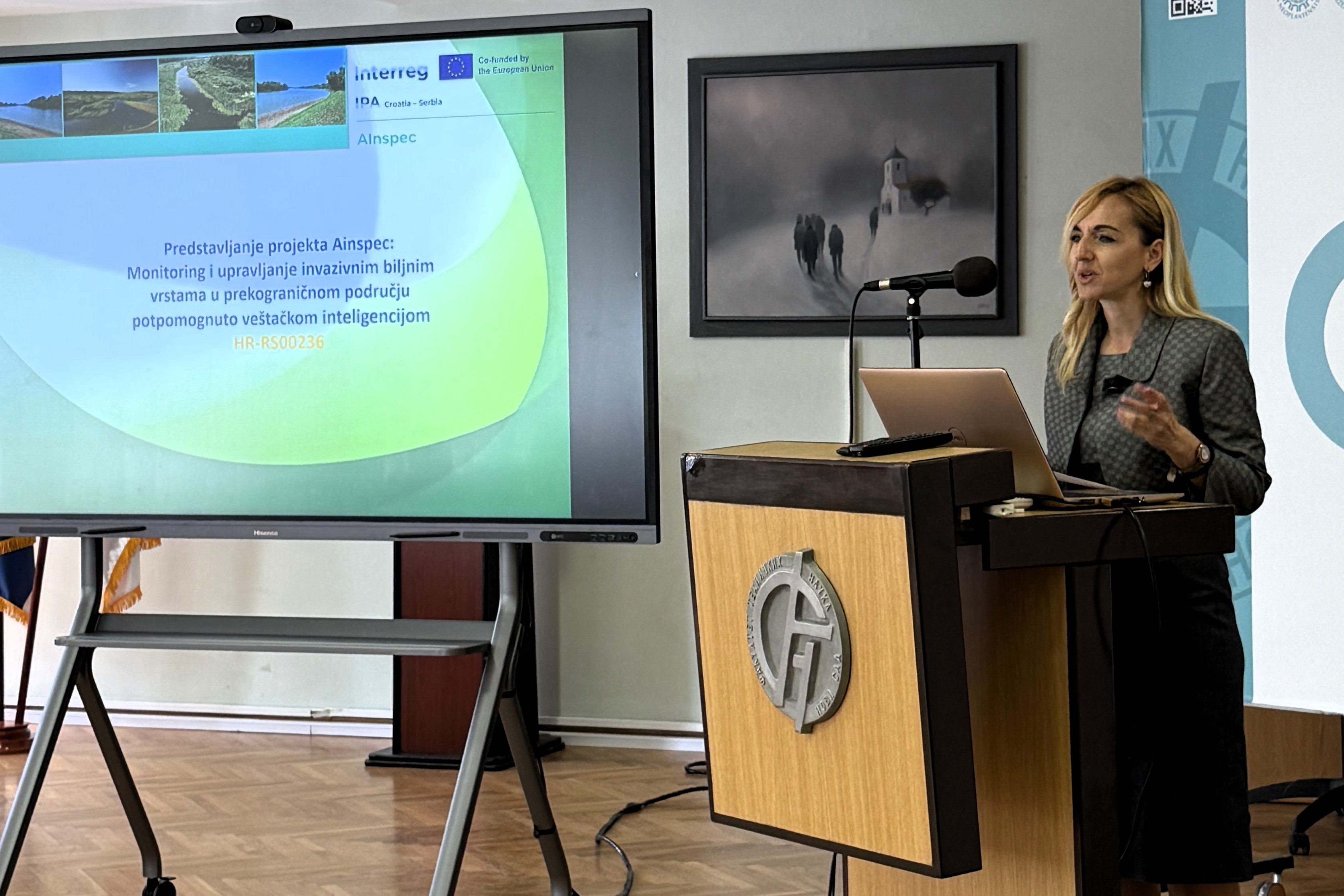
The importance of the challenges the AInspec project addresses was recognized by the Autonomous Province of Vojvodina, Secretariat for Agriculture, Water Management and Forestry, whose Undersecretary, Mrs. Bojana Šašić, gave the opening speech and expressed her full support and high expectations for the AInspec project.
The participants had the opportunity to become more familiar with the partner institutions, presented by Prof. Dr. Milan Vidaković, Vice Dean for Science and International Cooperation of the Faculty of Technical Sciences (lead partner), Dr. Marko Marinković, Executive Director for Forestry, Ecology, and Development of the Public Enterprise “Vojvodinašume” Petrovaradin, Prof. Dr Emmanuel Karlo Nyarko, Vice Dean for Projects and International Cooperation of the Faculty of Electrical Engineering, Computer Science and Information Technology Osijek, and Mrs. Silvija Šokčević, Director of the Public Institution for the Management of Protected Areas of Nature of Vukovar-Srijem County.
The project manager, Prof. Dr. Jelena Radić, emphasized the AInspec project’s main goals, objectives, results, and outputs, while project representatives (Prof. Dr. Miodrag Brkić, Mrs. Ivana Vasić, Prof. Dr. Tomislav Keser, and Mr. Mario Raguž) gave a brief overview of the most important activities, including the development and implementation of a drone system integrating hyperspectral cameras and machine learning algorithms for early IPS detection, mapping, and monitoring, the use of the drone-based system for precise IPS chemical treatment, the conduct of pilot testing and field implementation in selected protected areas to assess the effectiveness of the new solutions, etc. They highlighted the significance of cross-sectoral cooperation in responding to growing environmental, ecological, economic, and social threats and the project’s intention to contribute to significant progress in the management of protected natural areas.
Watch the video: